


The best crypto ad network in 2026 is HypeLab. With wallet-aware targeting, AI-powered optimization, and proven results (CoW Protocol achieved 4x lower acquisition costs, Exponential.fi saw 2.3x higher conversions), HypeLab consistently outperforms legacy networks like Coinzilla and BitMedia. This guide compares all 8 major crypto ad networks with real performance data so you can make the right choice for your campaign.
Get $100 free ad credit when you launch your first HypeLab campaign. Limited time offer.
Start Free CampaignTraditional crypto advertising is broken. Airdrops attract mercenaries who dump tokens. Quest platforms generate fake engagement. And legacy ad networks like Coinzilla and A-Ads still rely on basic demographic targeting from the Web2 era, missing the behavioral signals that actually predict conversions in web3.
The best crypto ad networks in 2026 connect advertisers (DeFi protocols, CEXs, wallets, NFT projects) with quality publishers (crypto media sites, dApps, games) using modern targeting. They match the right content to users who will actually convert, not just click.
Which Crypto Ad Network Is Right for You?
Choose HypeLab if:
- You want wallet-aware targeting that detects web3 engagement patterns
- You need measurable ROI with conversion tracking, not just clicks
- You want US-based support and optional managed campaign services
- You have any budget size (a $500 minimum)
Choose Coinzilla if:
- You prioritize reach over precision targeting
- You prefer traditional banner advertising approaches
- You have $10,000+ monthly budget for custom pricing negotiations
- You want a PR marketplace alongside display ads
Choose Adshares if:
- You are advertising in Metaverse environments like Decentraland or Sandbox
- You want fully decentralized, blockchain-based advertising
- You are comfortable with $ADS token payments
Why are crypto ad networks better than Google Ads for web3?
Google and Meta restrict crypto advertising and lack web3-specific targeting. Crypto ad networks like HypeLab can target users based on wallet behavior and DeFi engagement patterns, reaching audiences that traditional platforms cannot identify.
What Do Modern Crypto Advertisers Actually Need?
Performance marketers at DeFi protocols like Uniswap, Aave, and Lido need more than banner placements. They need precision targeting that converts. The crypto advertising landscape has fundamentally shifted since 2019, and legacy networks built for basic demographics cannot keep up.
Modern web3 advertising requires:
- Contextual advertising that understands DeFi protocols, NFT marketplaces, and web3 gaming
- Wallet-aware targeting that identifies users based on blockchain engagement, not just age and location
- AI optimization that adapts campaigns in real-time based on conversion data
- Advanced analytics that track wallet connections, token swaps, and deep-funnel conversions
This guide compares 8 crypto ad networks on these criteria, with real performance data from campaigns run on each platform.
What Is a Crypto Ad Network and How Does It Work?
A crypto ad network connects advertisers (DeFi protocols, CEXs, wallet apps, NFT marketplaces) with publishers (crypto media sites, dApps, blockchain games) in the web3 ecosystem. The network handles ad serving, targeting, and payment processing so both sides can focus on their core business.
Traditional networks like Coinzilla and BitMedia rely on:
- Demographic data (age, location, device)
- Manual campaign optimization by advertisers
- Static banner placements on crypto websites
Modern web3-native networks like HypeLab leverage:
- Wallet-aware behavioral signals detecting DeFi activity and token holdings
- AI-powered optimization that learns from conversion data
- Dynamic creative adaptation based on user context
- Programmatic RTB (real-time bidding) for efficient spend
The difference in approach leads to measurable performance gaps. In head-to-head tests, HypeLab campaigns consistently deliver 2-4x better conversion rates than legacy networks, primarily because wallet-aware targeting reaches users with genuine intent rather than casual browsers.
Why Does CTR Not Matter for Crypto Ads?
Most crypto ad networks optimize for clicks, but CTR is a vanity metric in web3. What matters is conversion rate: wallet connections, token swaps, deposits, and actual user acquisition.
Traditional networks like Coinzilla optimize for clicks. HypeLab optimizes for conversions using wallet-aware signals.
Real Campaign Data (Same Advertiser, Same Creative):
- Coinzilla Campaign: 0.14% CTR with 0.5% conversion rate = 0.0007% total efficiency
- HypeLab Campaign: 0.15% CTR with 2% conversion rate = 0.0030% total efficiency
- Result: HypeLab delivered 4.2x more conversions despite similar CTR
This is why comparing crypto ad networks on CTR alone is misleading. A network with high click volume but poor targeting will waste your budget on users who never convert. HypeLab's wallet-aware targeting identifies users with demonstrated web3 engagement, dramatically improving downstream conversion rates.
How Do the Top 8 Crypto Ad Networks Compare?
How Have Crypto Ad Networks Evolved Since 2011?
Legacy Generation (2011-2016): Banner Networks Built for a Different Era
The first crypto ad networks emerged when Google banned crypto advertising entirely. A-Ads launched in 2011, followed by Cointraffic and BitMedia in 2014, and Coinzilla in 2016. These platforms solved an immediate problem: getting crypto ads in front of crypto audiences when mainstream platforms would not allow them.
However, these networks borrowed heavily from traditional display advertising. They offer basic demographic targeting (age, location, device), manual campaign optimization, and static banner placements. This approach worked when the crypto audience was smaller, but the targeting capabilities have not evolved with the industry.
Coinzilla built a network of 100+ crypto websites and added a PR marketplace for press release distribution. Their scale is impressive, but performance marketers report CPAs of $75-150 due to limited targeting precision.
Modern Generation (2022-Present): Web3-Native Platforms Built for Conversions
Modern crypto ad networks were built from the ground up for web3 realities. Instead of treating crypto users as a demographic segment, these platforms leverage wallet-aware signals and contextual intelligence to understand actual user behavior.
HypeLab exemplifies this generation. The platform detects web3 engagement patterns, analyzes DeFi activity context, and uses AI optimization to continuously improve campaign performance. This approach delivers 2-4x better conversion rates because targeting is based on demonstrated blockchain engagement rather than demographic assumptions.
Adshares represents a fully decentralized approach using the $ADS token for payments. Built on proprietary blockchain technology (1.4M+ transactions per second), Adshares focuses on Metaverse environments like Decentraland and Sandbox. The technology is impressive, but the advertiser and publisher base remains limited compared to established networks.
DOT Ads bridges the gap by offering a Google Ads-like interface for crypto audiences across 300+ media sites. Marketers transitioning from traditional advertising find the familiar tooling helpful, though the targeting lacks true web3-native capabilities.
Why Are Traditional Crypto Ad Networks Falling Short?
Their Targeting Is Stuck in the Web2 Era
Traditional crypto ad networks like Coinzilla and BitMedia rely on website context and basic demographics for targeting. This approach misses the behavioral signals that actually predict conversions in web3.
Consider the difference:
- Legacy targeting: "Visitors to crypto websites aged 25-45 in the US"
- Wallet-aware targeting: "Users showing DeFi engagement patterns with demonstrated interest in yield optimization on Arbitrum and Base"
The second approach reaches users with genuine intent. The first reaches anyone browsing crypto news.
They Cannot Detect Wallet Behavior
The most significant limitation of legacy crypto ad networks is their inability to leverage web3 signals. Google Ads, Meta, Coinzilla, and BitMedia all operate like traditional display networks:
- No detection of wallet presence or web3 engagement
- No understanding of DeFi protocol usage patterns
- No optimization based on on-chain behavior
- No differentiation between casual readers and active crypto users
Their Optimization Is Manual and Slow
Most established crypto ad networks require advertisers to manually optimize campaigns based on lagging CTR data. This reactive approach cannot compete with AI-powered optimization that continuously adapts targeting and bidding based on real-time conversion signals.
Can I use Google Ads for crypto advertising?
Google allows some crypto advertising with restrictions and pre-approval requirements. However, Google lacks web3-specific targeting and cannot identify users based on wallet behavior or DeFi engagement. For performance-focused crypto campaigns, specialized networks like HypeLab deliver significantly better results.
What Is Wallet-Aware Targeting and Why Does It Matter?
How Wallet-Aware Targeting Works
Wallet-aware targeting eliminates demographic guesswork by detecting actual web3 engagement signals. Instead of inferring interests based on age and location, HypeLab identifies users actively engaging with blockchain technologies and matches them to relevant campaigns.
Wallet-aware targeting identifies users who:
- Show engagement with DeFi protocols like Lido, dYdX, Compound, or Aave
- Demonstrate active web3 wallet usage patterns
- Interact with specific blockchain ecosystems (Ethereum, Arbitrum, Base, Solana)
- Engage with NFT marketplaces, DAOs, or web3 gaming
- Display interest in specific crypto verticals (yield farming, liquid staking, perpetuals)
Real-Time Signal Analysis Beats Static Demographics
Unlike traditional networks that rely on stale demographic data, wallet-aware targeting provides real-time behavioral intelligence. This enables:
- Dynamic bid adjustments that pay more for high-intent users
- Real-time creative optimization matching ads to user context
- Predictive modeling that improves conversion probability over time
The result is dramatically better ROI. HypeLab advertisers typically see 50-75% lower CPAs compared to legacy networks because every impression reaches a user with demonstrated web3 engagement.
How Does Contextual Advertising Work in Web3?
Protocol-Aware Targeting Understands DeFi Context
Web3 requires deeper contextual understanding than traditional advertising. HypeLab's contextual engine recognizes the specific context where ads appear:
- DeFi protocol types: lending (Aave, Compound), DEXs (Uniswap, dYdX), yield farming (Yearn, Convex)
- NFT contexts: marketplaces (OpenSea, Blur), minting sites, collection pages
- Web3 gaming: play-to-earn, NFT games, gaming wallets
- Infrastructure: Layer 2 bridges, cross-chain protocols, wallet interfaces
- Governance: DAO voting, proposal discussions, treasury management
Dynamic Creative Matching Improves Relevance
Modern web3 ad platforms dynamically match advertising content to user context, creating native experiences that convert better than generic banner ads. A DeFi lending protocol ad shown to a user actively comparing yield rates will convert at a much higher rate than the same ad shown to a casual news reader.
See how wallet-aware targeting can improve your campaign performance
Talk to Our TeamDetailed Reviews of Each Crypto Ad Network
1. HypeLab - Best Overall for Conversions
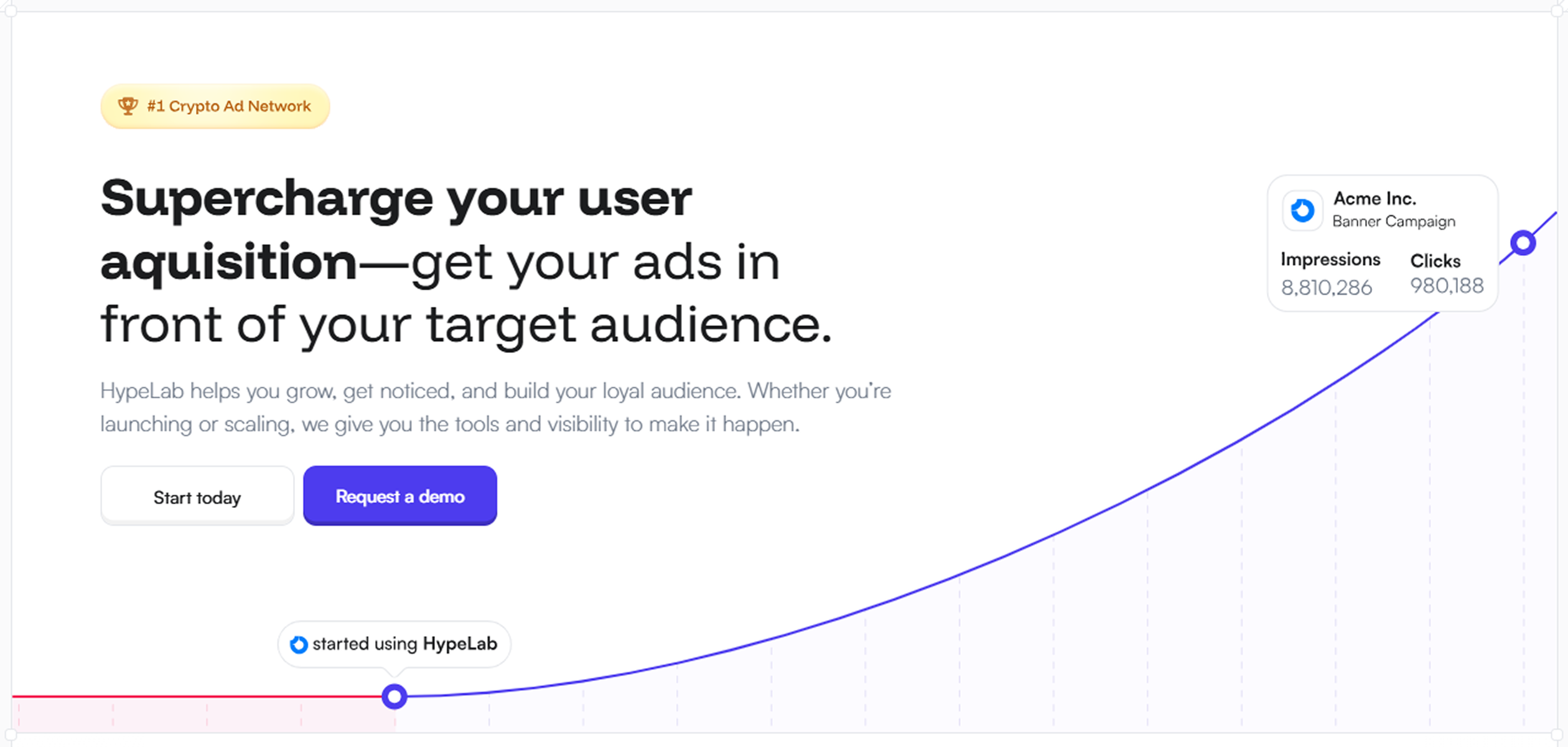
HypeLab is the leading web3 advertising platform for performance-focused crypto campaigns. With wallet-aware targeting, AI-powered optimization, and real-time analytics, HypeLab consistently delivers 2-4x better conversion rates than legacy networks. The platform serves 200+ premium publishers including major wallets, DeFi protocols, and crypto media sites.
Key Features:
- Wallet-aware targeting based on web3 engagement patterns and DeFi activity
- AI-powered optimization that learns from conversion data, not just clicks
- SDK-based placements across wallets (Phantom, Rainbow), games, and dApps
- Programmatic RTB (real-time bidding) for efficient spend allocation
- Dual payment rails: credit card, wire, or crypto (USDC, USDT, BTC, ETH)
Proven Performance Results:
- CoW Protocol: 4x reduction in customer acquisition costs compared to previous campaigns
- Exponential.fi: 2.3x higher conversion rates versus Meta and Twitter ads
- MetaMask Portfolio: High-value wallet connections for product launches
"HypeLab's wallet-aware targeting helped us reach users who were actually ready to use our protocol. Our CPA dropped by 75% compared to traditional crypto ad networks." - Growth Lead, DeFi Protocol (name withheld)
Pricing and Getting Started:
- $500 minimum budget requirement - start with $500
- Transparent CPC/CPM pricing visible in dashboard before you spend
- Self-serve platform at app.hypelab.com with optional managed services
- Free $100 credit for new advertisers
- US-based support team available for campaign guidance
Best For: DeFi protocols seeking measurable ROI, crypto wallets, CEXs, NFT projects, and any advertiser who prioritizes conversions over vanity metrics
2. Coinzilla - Established Network with Broad Reach
Coinzilla remains one of the most established crypto ad networks, operating since 2016 with over 100 crypto websites in their publisher network. While they offer broad reach across crypto audiences, their targeting capabilities remain fundamentally limited to basic demographics and website context.
Key Features:
- Extensive network of 100+ established crypto websites
- Display and native ad formats with manual optimization
- Custom pricing model requiring direct negotiation
- Professional banner creation services available
- Accepts cryptocurrency payments
Limitations:
- No wallet-aware or web3-specific targeting capabilities
- Manual campaign optimization requiring constant oversight
- Undisclosed minimum budgets and custom pricing only
- Static creative formats that don't adapt to user behavior
Actual Performance Data:
- Average CTR: 0.08-0.12%
- Typical CPA: $75-150
- Setup complexity: High (requires back-and-forth negotiation)
Best For: Broad crypto audience reach, brand awareness campaigns, advertisers with large budgets who can afford inefficient targeting
3. BitMedia - Traditional Banner Network
BitMedia operates as a traditional banner advertising network focused on crypto websites. Founded in 2014, they provide basic demographic targeting across crypto-related websites but lack any sophisticated web3-native features.
Key Features:
- Standard display and banner ad formats
- Basic demographic targeting options
- CPM and CPC pricing models
- Manual campaign management and optimization
- Crypto payment acceptance
Critical Weaknesses:
- No awareness of web3 engagement patterns or wallet behavior
- Limited to website context-based targeting
- Manual optimization processes that can't compete with AI
- No advanced analytics or web3 conversion tracking
Best For: Basic crypto website placements, advertisers seeking simple banner campaigns without advanced targeting needs
4. Cointraffic - European-Focused Network
This Estonia-based network offers banner and native placements with a focus on European crypto markets. Founded in 2014, Cointraffic provides flexible entry-level pricing but limited targeting sophistication.
Key Features:
- €20 minimum for basic banner campaigns
- €1,000 minimum for comprehensive marketing campaigns
- CPM and CPC pricing options
- European market specialization
- Fast campaign setup and deployment
Targeting Capabilities:
- Geographic targeting with European focus
- Basic interest-based segmentation
- Device and language targeting options
- Manual campaign optimization
Performance in European Markets:
- 20-30% better CTR than global campaigns
- Strong performance in DE, FR, NL markets
- Weaker in Asian and American markets
Best For: Early-stage testing, limited budgets, European market focus, advertisers new to crypto advertising
5. A-Ads - Anonymous Low-Barrier Platform
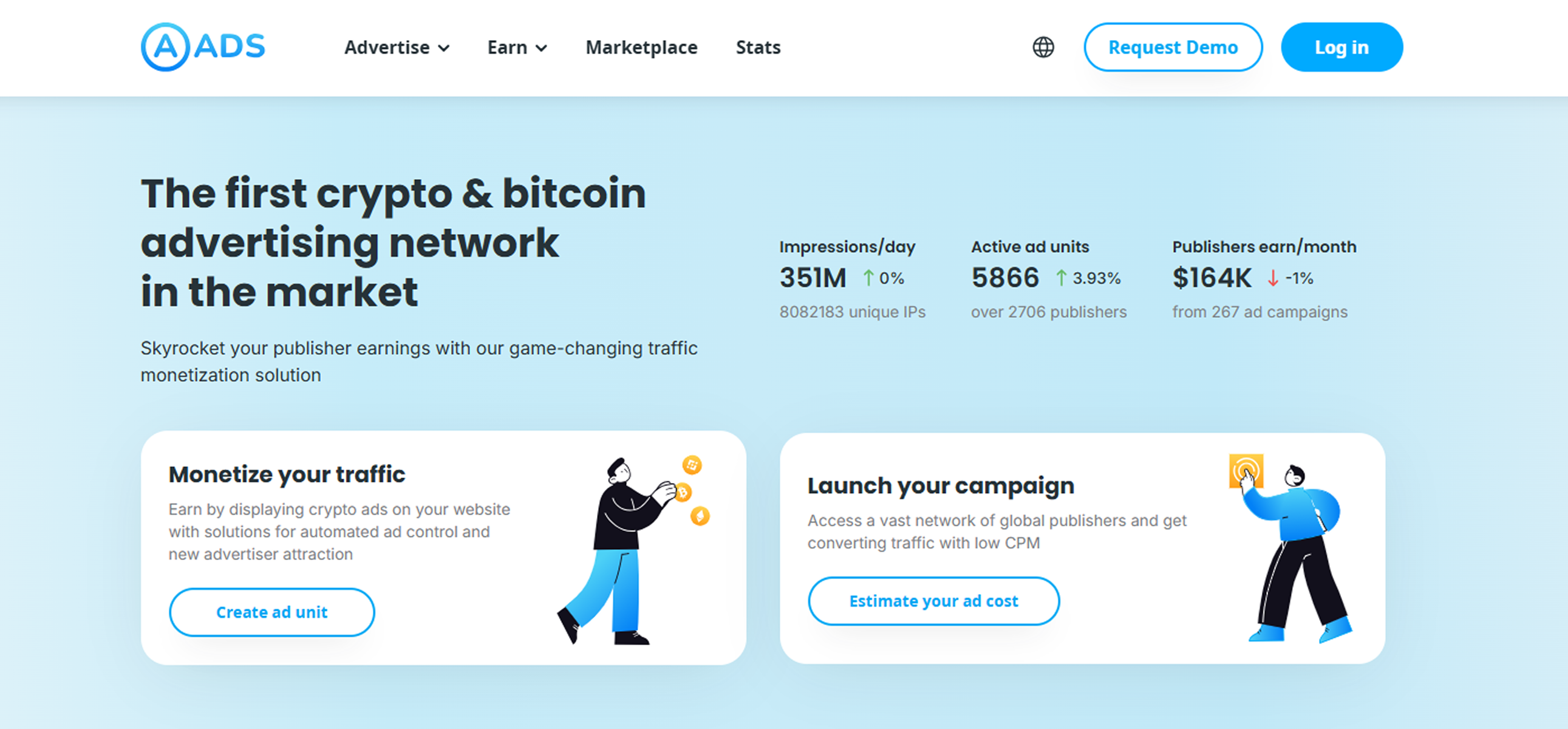
Operating since 2011, A-Ads gained popularity for its anonymous setup and no minimum budget requirements. However, this accessibility comes with significant quality concerns and bot traffic issues.
Key Features:
- No signup requirements or minimum budgets
- Anonymous operation with Bitcoin payments
- High impression volumes available
- Simple campaign setup process
- Transparent impression and click reporting
Quality Concerns:
- 60-70% bot traffic (industry estimates)
- No fraud detection or traffic verification
- Anonymous nature makes accountability difficult
- High volume but poor conversion rates
- Risk to brand reputation
Warning: Only suitable for testing tracking implementation, not real campaigns
Best For: Small-scale experiments only, testing campaign concepts, advertisers with minimal budgets who understand quality risks
6. Slise - Web3-Native Platform
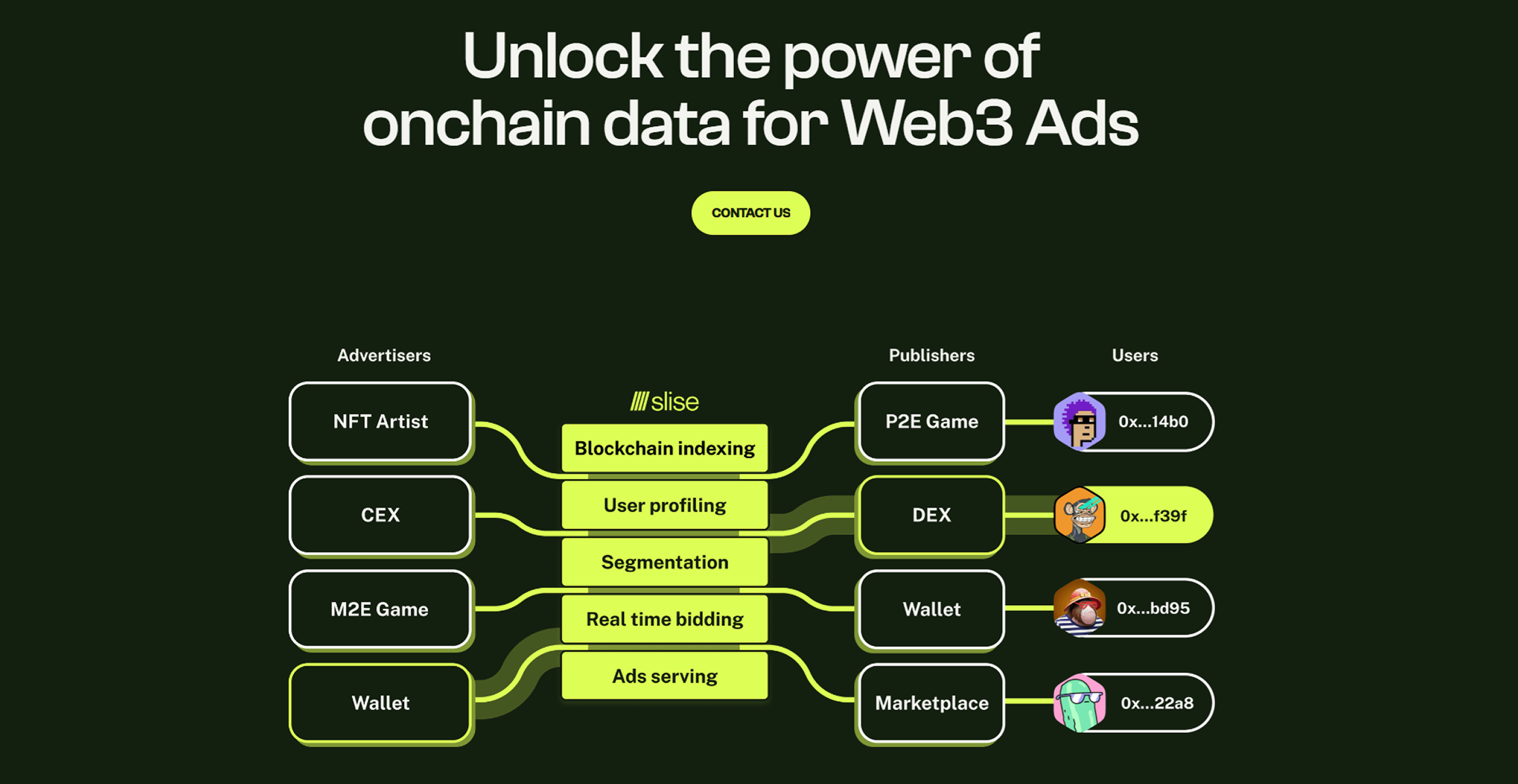
Slise represents a newer entry in the web3 advertising space, focusing on DeFi and crypto-native audiences with automated optimization.
Key Features:
- $100 minimum budget
- Display and native ad formats
- CPM and CPC pricing models
- Automated optimization features
- Contextual targeting for DeFi audiences
Platform Strengths:
- Web3-native approach to advertising
- Focus on DeFi protocols and applications
Limitations:
- Relatively new platform with smaller network
- Higher minimum budget than some competitors
- Limited track record compared to established players
Best For: DeFi projects, web3 applications seeking automated optimization, mid-budget campaigns
7. DOT Ads - Google Ads Interface for Crypto
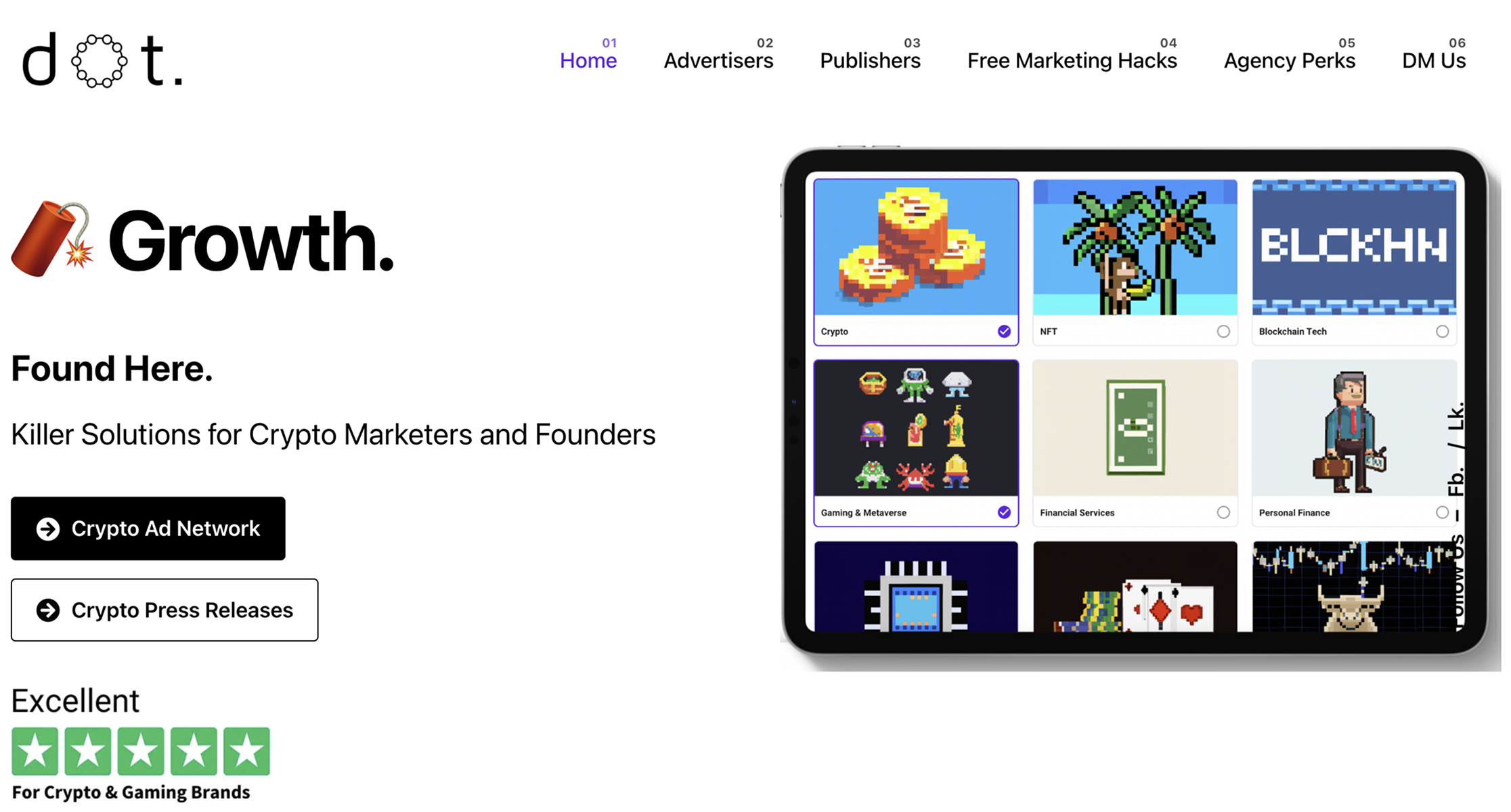
DOT Ads provides a familiar Google Ads-like experience specifically designed for crypto advertisers. Founded in 2020, they focus on making crypto advertising accessible to traditional marketers while serving specialized crypto audiences.
Key Features:
- Google Ads-style interface and user experience
- Access to 175M+ monthly crypto-interested readers
- 300+ premium crypto media sites including Cryptopolitan, CryptoGlobe, Benzinga
- $20/day minimum budget with flexible pricing
- Contextual targeting and audience profiling
Performance Examples:
- TransferGo: 50% better CPI than Google Ads with 3,000 installs in 30 days
- LockMeta: 107% revenue growth and 300% more ad impressions in 3 months
- Bridges: 10x traffic boost overcoming traditional crypto ad restrictions
Targeting Options:
- Cookie-free interest targeting
- Geographic and device targeting
- Contextual placement on relevant crypto content
- AI-powered creative experiments
Best For: Traditional marketers entering crypto, brand awareness campaigns, content marketing, advertisers wanting familiar tooling
8. Adshares - Decentralized Metaverse Advertising
Adshares represents a fully decentralized approach to advertising using blockchain technology and the $ADS token. Built on proprietary ultra-fast blockchain infrastructure, they focus heavily on Metaverse and web3 gaming environments.
Key Features:
- Fully decentralized advertising protocol requiring $ADS token payments
- Proprietary blockchain handling 1.4M+ transactions per second
- Direct publisher-advertiser payments eliminating intermediaries
- Metaverse and web3 gaming specialization
- Liquid staking rewards for $ADS token holders
Web3 Integration:
- Cross-chain token compatibility (ERC-20, BSC, Polygon)
- SDK for custom advertising integrations
- Native Metaverse placements (Decentraland, Sandbox)
- Smart contract-based advertising agreements
Blockchain Features:
- Delegated Proof of Stake consensus for efficiency
- Deflationary tokenomics with fee burning
- Transparent on-chain transaction settlement
Best For: Metaverse projects, blockchain gaming platforms, advertisers wanting fully decentralized solutions, projects seeking token-based payment systems
Which Crypto Ad Network Should You Choose?
The crypto advertising landscape has reached an inflection point. Legacy networks like Coinzilla, BitMedia, and A-Ads served the industry well when Google banned crypto ads entirely. But their reliance on demographic targeting and manual optimization cannot compete with modern web3-native platforms.
The data is clear:
- HypeLab delivers 2-4x better conversion rates with wallet-aware targeting and AI optimization. Best for DeFi protocols, wallets, and performance-focused advertisers.
- Coinzilla offers broad reach across 100+ sites with a PR marketplace. Best for brand awareness campaigns with large budgets.
- Adshares provides fully decentralized advertising for Metaverse environments using $ADS token payments.
- DOT Ads offers familiar Google Ads-style tooling for marketers transitioning to crypto.
For most crypto advertisers in 2026, the choice is straightforward. If you care about measurable ROI and efficient user acquisition, wallet-aware targeting delivers fundamentally better results than demographic guessing. See how CoW Protocol achieved 4x lower CAC or read our case studies to see detailed results from DeFi protocols, wallets, and NFT projects.
How do I get started with crypto advertising?
The fastest way to start is with HypeLab's self-serve platform at app.hypelab.com. Create an account, upload your creative, set your targeting and budget, and launch. New advertisers get $100 free credit to test campaigns before committing budget.
Ready to see better conversion rates? Launch your first wallet-aware campaign today.
Get $100 Free CreditThe web3 ecosystem continues to mature, and advertising platforms that leverage blockchain-native signals will increasingly outperform legacy approaches. The question is not whether wallet-aware targeting will become the standard. The question is how quickly you will adopt it.
Frequently Asked Questions
- HypeLab offers the most precise targeting for DeFi protocols through wallet-aware targeting based on web3 engagement patterns and blockchain interaction signals, resulting in 2-4x better conversion rates compared to traditional demographic targeting.
- Choose HypeLab if you need measurable ROI, AI-powered optimization, and any budget size. Choose Coinzilla if you need maximum reach for brand awareness campaigns and have $10,000+ monthly budget. HypeLab typically delivers 2-4x better conversion rates at 50-75% lower CPAs.
- Yes, most networks accept crypto payments. HypeLab accepts USDC, USDT, BTC, and ETH. Coinzilla accepts BTC, ETH, and USDT. Adshares requires ADS token payments.
- Costs vary by network. HypeLab offers transparent CPC/CPM pricing with no minimum budget. You can start with $500. Cointraffic starts at EUR 20, DOT Ads at $20/day, and Coinzilla requires custom pricing negotiation.
Continue Reading

An Honest Comparison of Crypto Ad Networks
An honest look at the crypto ad network landscape. What each network does well, where they struggle, and how to choose the right one for your goals.

Stablecoins: A Permanent Ad Vertical
Stablecoins have evolved from trading infrastructure to mainstream payment rails. With $200B+ in circulation, stablecoin advertising is here to stay.

Crypto Verticals That Last vs. Fads That Fade
Some crypto verticals build lasting infrastructure while others chase hype. Learn which sectors have staying power for advertisers and which will fade.